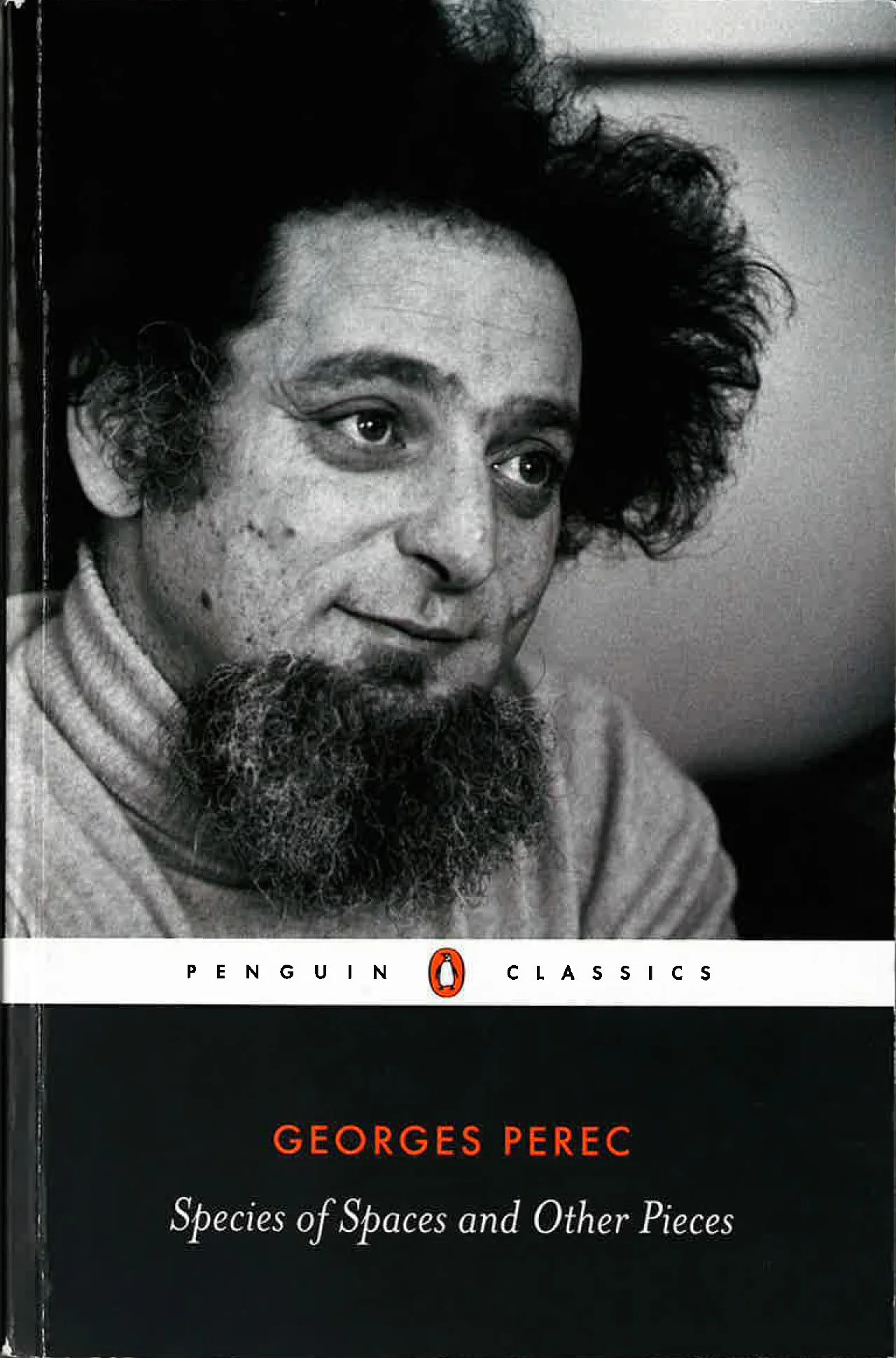
“What is a neighbourhood? […] the portion of the town you can get around easily on foot or...that part of the town you don’t need to go, precisely because you are already there. […]”
— George Perec, Species of Spaces and Other Pieces, London, Penguin Classic, 2008
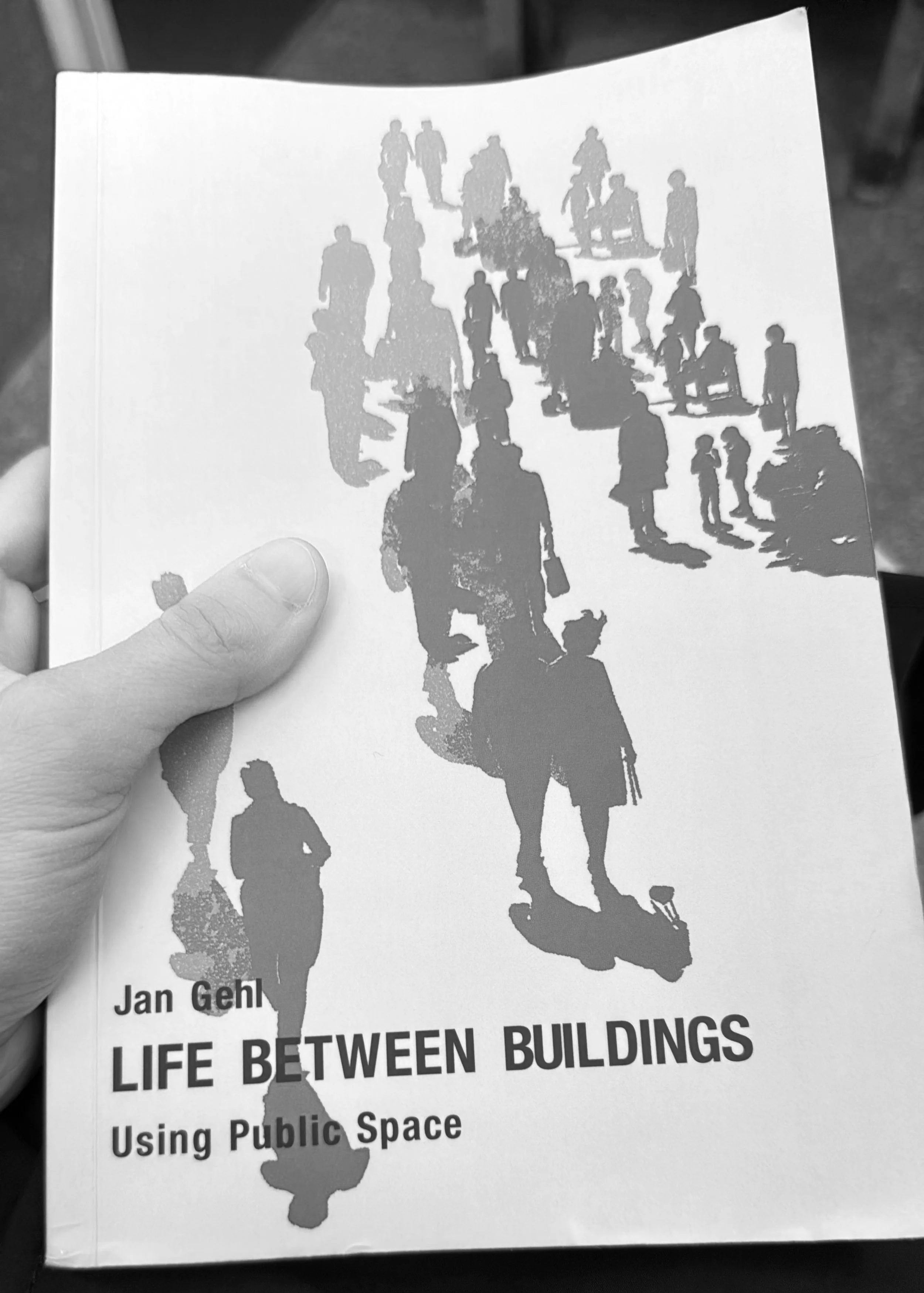
“If facilities are provided for bringing ordinary domestic activities - repairs, hobbies, meal preparations, and meals - out on the public side of the residencies, life between buildings can be substantially enriched.”
Jan Gehl, Life between buildings: Using Public Space, Island Press, 2011
Probably a classic for planners and urban designers, I found this book really enjoyable. Reading it projected me in cafes, pedestrian streets, squares, Scandinavian and Italian cities. It reminded me of the type of analysis that me and my friend undertook at university. We would go around the city and count how many people and cars were passing by the main station square. We would go around the council estates to survey how residents were taking ownership of undefined communal space. There was no such book to inspiring us in observing the life between buildings, only our unconscious interest and curiosity in understanding how people’s life and encounters are influenced by the design of buildings and spaces between buildings.
This book is like a notebook of meaningful observations of the public life! Take the book, sit in a café and you will draw a parallel between the described world and the observed world.
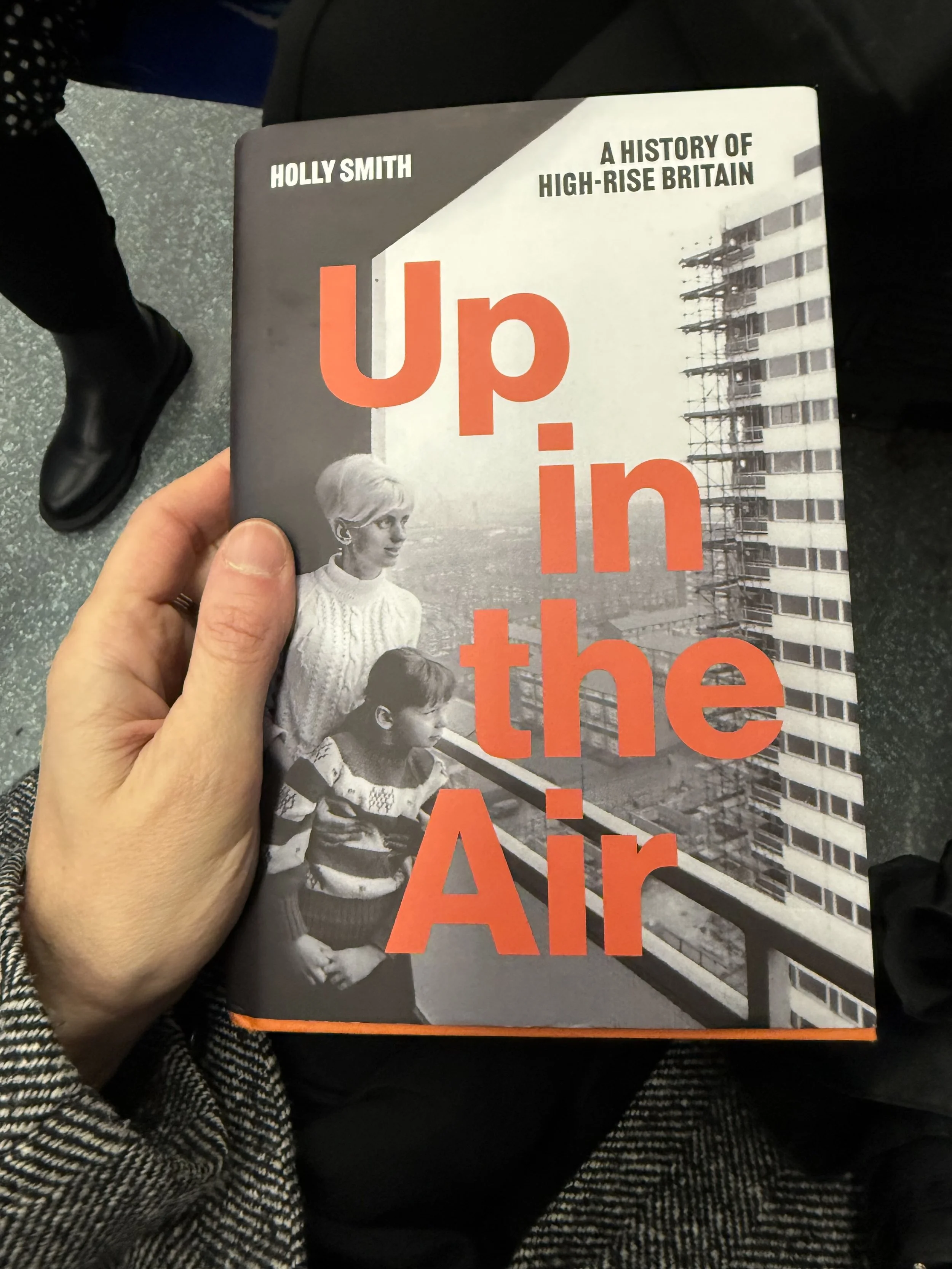
Holly Smith, Up in the air. A history of high-rise in Britain, Verso, 2025
Leading on the tall building strategy for Newham's emerging Local Plan I read several representations from residents who objected to tall building developments. Some residents shared the fear of a new Ronan Point disaster. At that point in time, I briefly heard about the history of the tower block that collapsed in 1968 and I was sympathetic with the concerns in relation to the post-war developments which have sometimes demonstrated to be unsuccessfully delivered and managed.
‘Up in the air’ by Dr Holly Smith gave me a comprehensive picture of the Ronan Point disaster and its consequences. I can now deeply understand the fear around tall buildings in Newham and the lack of confidence in the local authority’s approach. The Ronan point event cast a shadow on council housing programmes, and it originated a grassroots movement that fought for the demolition of prefabricated tower blocks across Britain. One mistake that was copied and pasted across Britain obscured the value of tall buildings and their response to the post-war reconstruction. However, Up in the air offers a different perspective to the narrative. Through detailed archive research focused on resident’s actions, Dr Holly’s research reveals that while many residents fear for their safety, others saw tall buildings as symbols of progress, illustrating diverse and complex reactions to high-rise living.
If you want to learn more, not only about the urban and architectural history of high-rise buildings, but about the stories of residents that lived and fought to demolish or preserve their council homes, I would highly recommend this book.